By James Retherford / The Rag Blog / September 24, 2026
Noël Godin, L’Entarteur
“Entartons les pompeux cornichons!” (”Let’s pie the pompous windbags!“) —Noël Godin (1945-2026)
”Some people paint. Others make films or sculptures,“ National Public Radio presenter Joel Rose reported last month on All Things Considered. ”Noël Godin’s medium was cream pies, and his canvas … the human face.“
Godin died August 23, 2026, at the age of 80. He was a Belgian anarchist, actor, and social commentator, but he was best known for his entartage, or cream pie throwing, in the great tradition of late nineteenth century English music hall farce and Mack Sennett’s early twentieth century silent film slapstick masterpieces.
Under the nom de guerre Georges le Gloupier or L’Entarteur, the Belgian meringue-throwing marksman terrorized capitalists and politicians as well as pompous pseudo-intellectuals with some two dozen tart attacks over half a century. Through it all, in his words, ”I have always remained true to the spirit of May ’68. I still live for that time and have always advocated direct sabotage, the sabotage of the professions, the sabotage of the roles into which we are trapped by our day-to-day boredom.“
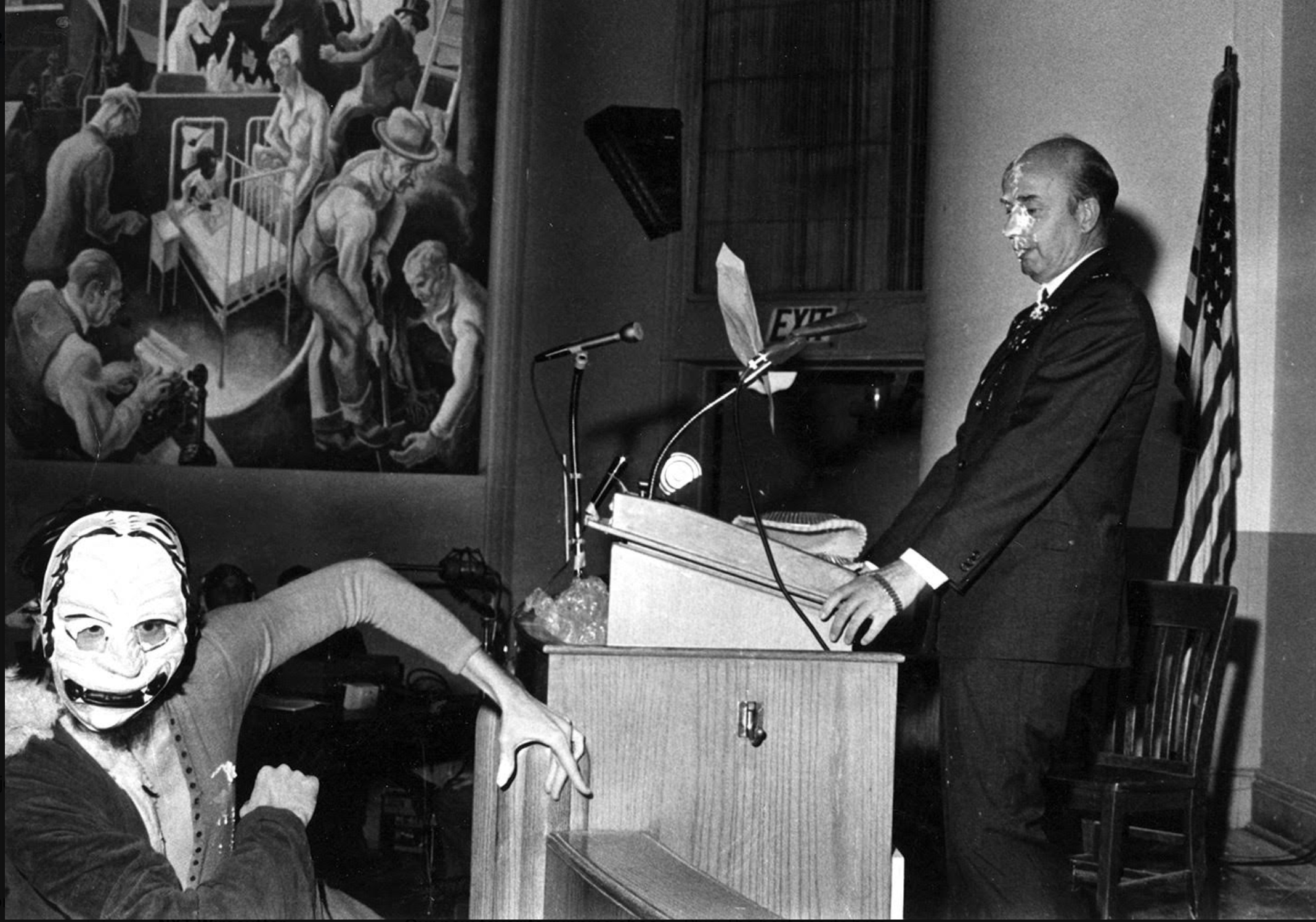
His first pie targeted well-known French author Marguerite Duras in November 1967 and was launched one month after my own first (and last) foray into tartist terrorism. On October 14, 1969, I delivered a perfectly pitched cream-filled “Yip Pie” into the face of former UC Berkeley president Clark Kerr as Yippie co-founder Jerry Rubin spoke to a large anti-Vietnam War rally on the Indiana University Bloomington campus less than two blocks away. Jerry had been a UC Berkeley student activist in 1964 when Kerr presided over mass arrests of free speech and anti-war protesters, and that ”cosmic convergence“ provided our ad hoc conspiratorial committee a rich, and somewhat cannabis inspired, context to put some GRRRRRR! into guerrilla theatre. The resulting action—brilliant (if I may say so) though widely misunderstood by those unversed in “dada dialectics”—made headlines across the United States and Europe.
SIDE NOTE: Journalist Rex Weiner erroneously wrote in The Paris Review in 2014 that his “buddy” and notorious counterculture chameleon Tom Forcade tossed “the first known instance of pastry as a political weapon”—at an obscenity and pornography commission hearing in Washington D.C. on May 13, 1970. In fact, the entartment seven months earlier of Dr. Kerr, then employed as a CIA-funded authority on student pacification, was the first launch of cream pastry as a new mise-en-scène of anti-authoritarian political theatre.
From November 1969 until his death, Godin and his International Patisserie Brigade (IPB)—marching behind their vaunted war-cry, “Gloop! Gloop! Gloop!”—pied more than two dozen big shits—from Bill Gates (Brussels, 1998) and former French president Nicolas Sarkozy (1997) to self-proclaimed “most gifted writer of my generation” Bernard-Henri Lévy, who was “entarted” eight times by Godin’s indefatigable pie posse. Lévy apparently possessed a special brand of puffed-up pomposity that made him the perfect prey for puff pastry.
To show that he was not beholden to notions of ideological purity, Monsieur le Gloupier even glopped renowned leftist filmmaker Jean-Luc Godard at the 1985 Cannes Film Festival. As the perp later recalled, Godard paused, “took out his cigar, and slowly began licking the cream off.” And then the legendary auteur praised the spectacle as “an homage to silent film’’—and gave Mr. Godin a guest pass for the entire festival.
According to the September 7, 2026, obituary published by The New York Times, Godin “viewed his life’s work as a series of miniature blockbusters. ‘Pastry attacks are made like films,’ he said in 2022. ‘Except that their main protagonists don’t know that they are playing in it.’”
In addition to the Keystone Kops, Charlie Chaplin, Laurel and Hardy, and the Three Stooges, Godin credited the Yippies as a major role in his own prankish inspiration. Despite differences—he described himself as an “anarcho-confectionist” while I lean into Marxism of both Karl and Groucho variety)—I always considered Monsieur le Gloupier a much more authentic standard-bearer for absurdist anti-authoritarian flan chicanery than copy-cat pastry self-promoters such as Forcade and Aron (the Pie Man) Kay, who did what Godin resolutely stated was “unthinkable”—i.e., sell “contracts” like a Mafia hitman.
The tarts were not tasty enough for Bill Gates
I was, as they say in show biz, a one-hit wonder. What my Yippie compadres and I staged in that Indiana University lecture hall in 1969 was a one-off guerrilla theatre performance, the denouement of a historic ”convergence“ (Kerr vs Rubin) and a teachable moment about authoritarianism (at least so it seemed as the bong made the first few rounds). But I never intended to make a career out of food fighting against the ruling class.
What Godin and his merry gloopsters did, however—in addition to tossing lots of sweet tarts in the service of democracy—was to inspire a generation of underground freedom-fighting guerrilla pâtissiers (most notably San Francisco’s Biotic Baking Brigade, the Taart Movement in the Netherlands, and Les Entartistes of Montreal) to continue to strike terror in the minds and egos of narcissistic oligarchs while bringing some comic relief to the grim task of class war.
(According to The Daily Beast, “fixer” Michael Cohen told a 2023 New York grand jury that Donald Trump’s now-much-analyzed sleepless nights full of unhinged social media rants are the direct result of a recurring nightmare in which stealth-targeted meringue sploshes his coif before slathering down onto his over-stuffed shirt.)
But, alas, while half-baked autocrats may tremble, we must not forget that Mr. Godin’s legacy also includes a sticky trail of freelancers—pied pipers, if you will—in need of bail money.
Clark Kerr’s ”Just Dessert“ (October 14, 1969)
Entarton!
[James Retherfordis an Austin-based writer, graphic designer, and political activist, and an occasional contributor to The Rag Blog. Jim, who was active in SDS, the Yippies, and political guerrilla theater, was a founder and editor of underground newspaper The Spectator in Bloomington, Indiana, in 1966, and was the ghost writer for Jerry Rubin’s iconic book, Do It! Find Jim’s work at Hot Digital Dog Design in Austin.]
By Michael Meeropol / The Rag Blog / August 20, 2026
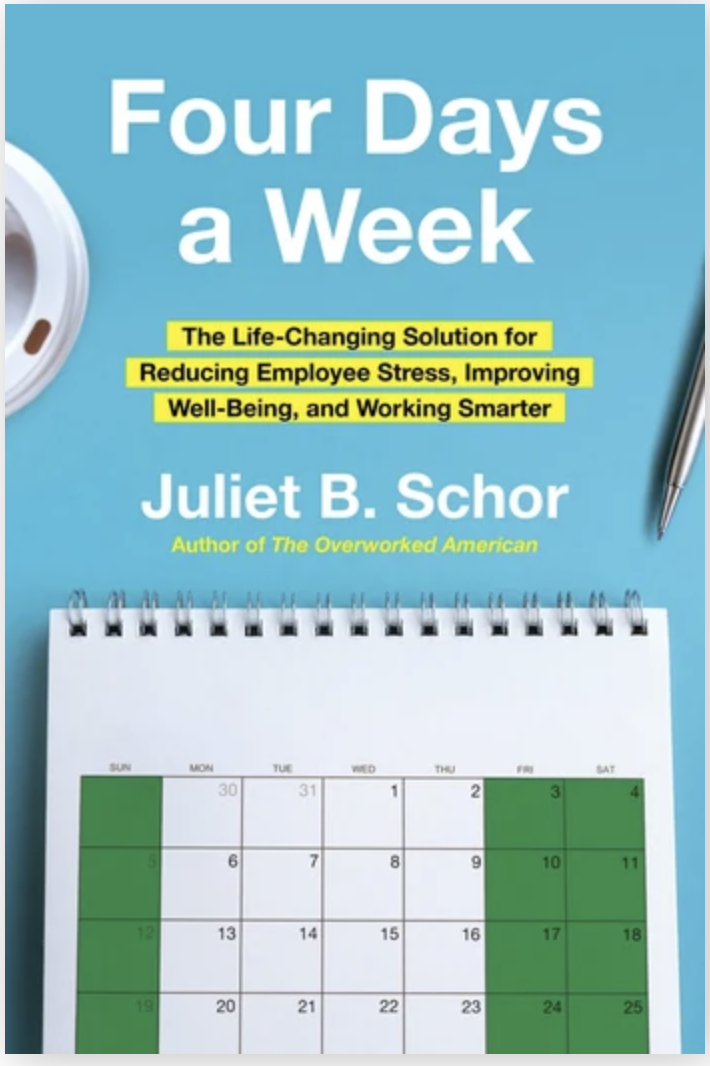
Mike Meeropol, Professor Emeritus of Economics at Western New England University, comments on Juliet B. Schor’s groundbreaking analysis on working too much and the possibilities of a four-day workweek. Meeropol is a frequent contributor to The Rag Blog and guest on Rag Radio.
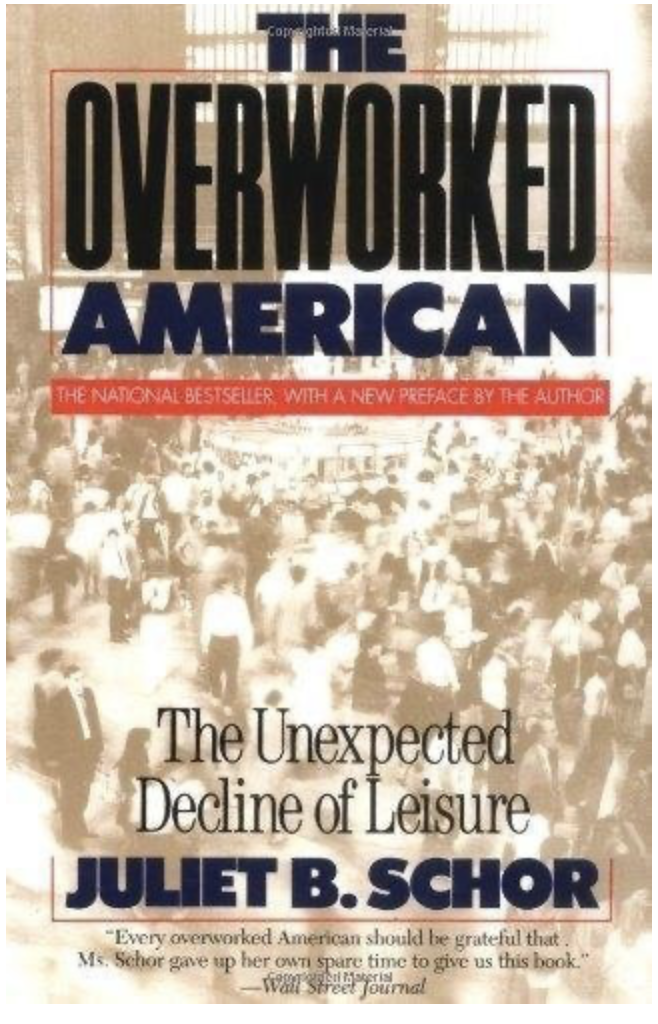
This article took me back over 30 years to 1992 when that same author, Dr. Juliet Schor of Harvard University, published an outstanding book entitled The Overworked American. Back then I was blown away by the information and conclusions of this book. I even reviewed it for the economics journal, Challenge. My review was in the July-August 1992 issue, and one can get access to it at JSTOR.
Juliet B. Schor, The Overworked American, The Unexpected Decline in Leisure, 2008, ISBN 978-0465054343, is still in print.
Building on her insights when she researched her 1992 book, Dr. Schor began in 2022 a long-term research effort to document the effects of experiments with a 4-day workweek, making 32 hours to norm. So far, the evidence is overwhelming. Workers report less burn-out, more ability to concentrate on the job and businesses report that productivity improvements have meant that even though the weekly pay has remained the same, the reduce 8 hours is more than made up for the most part.
My education on this issue began back in 1992. I learned from The Overworked American that contrary to popular myths, the industrial revolution with its increased productivity in both agriculture and manufacturing did not translate into increased leisure for workers. In fact, the opposite happened. Medieval work had been highly regulated by the myriad feast days that slowed down the pace of work over the seasons. And in the fields, that pace was set by the serf or the peasant. There were no overseers pushing the pace of work as had occurred under Roman slavery and would later be the method of control on large plantations in the American slave south.
Per Schor’s book, required work for the Lord in medieval times was about 150 days a year but there was always self-sufficiency work (milking the cows, feeding the sheep, making sure the fences were mended, etc.) that was done all the time, even on holiday or feast days. Historians continue to debate the question of what was required work as this AdamSmith.org blog illustrates.
Michael Meeropol and Gerald Markowitz talk about David Rosner’s contributions to the defense of Public Health on Rag Radio. Gerald Markowitz and David Rosner co-authored groundbreaking books on industrial pollution, silicosis, and lead poisoning. Listen to the interview on Rag Radio 91.7 FM.
On May 25, 2026, the Public Health and History Community lost David Karl Rosner — a great scholar and citizen — while the family lost a loving husband, father and grandfather. He was a long-time friend who I first met in the summer of 1962. That year, he was a 15-year-old maintenance man at a summer camp where I was a 19-year-old folk-music counselor. His sister Adrienne was also working at the same camp. During that summer she met and later married my closest friend Jerry Markowitz. Two years later, Adrienne introduced me to the woman who would become my wife for 53 years.
David received his PhD from Harvard University in the field of the History of Medicine. His dissertation was published as “A Once Charitable Institution.” This was an exploration of how NYC charitable hospitals succumbed to the for-profit model of institutional medicine in the early years of the 20th century. For the rest of his career, in many of his projects, he used his formidable skills as a historian-investigator to illuminate the methods by which powerful economic institutions channeled technology to make sure that profit was king — oftentimes to the detriment of the health and safety of workers and the public.
Beginning in the 1990s, he embarked on decades of collaboration with Jerry Markowitz, an outstanding historian in his own right. They wrote or edited 10 books together.
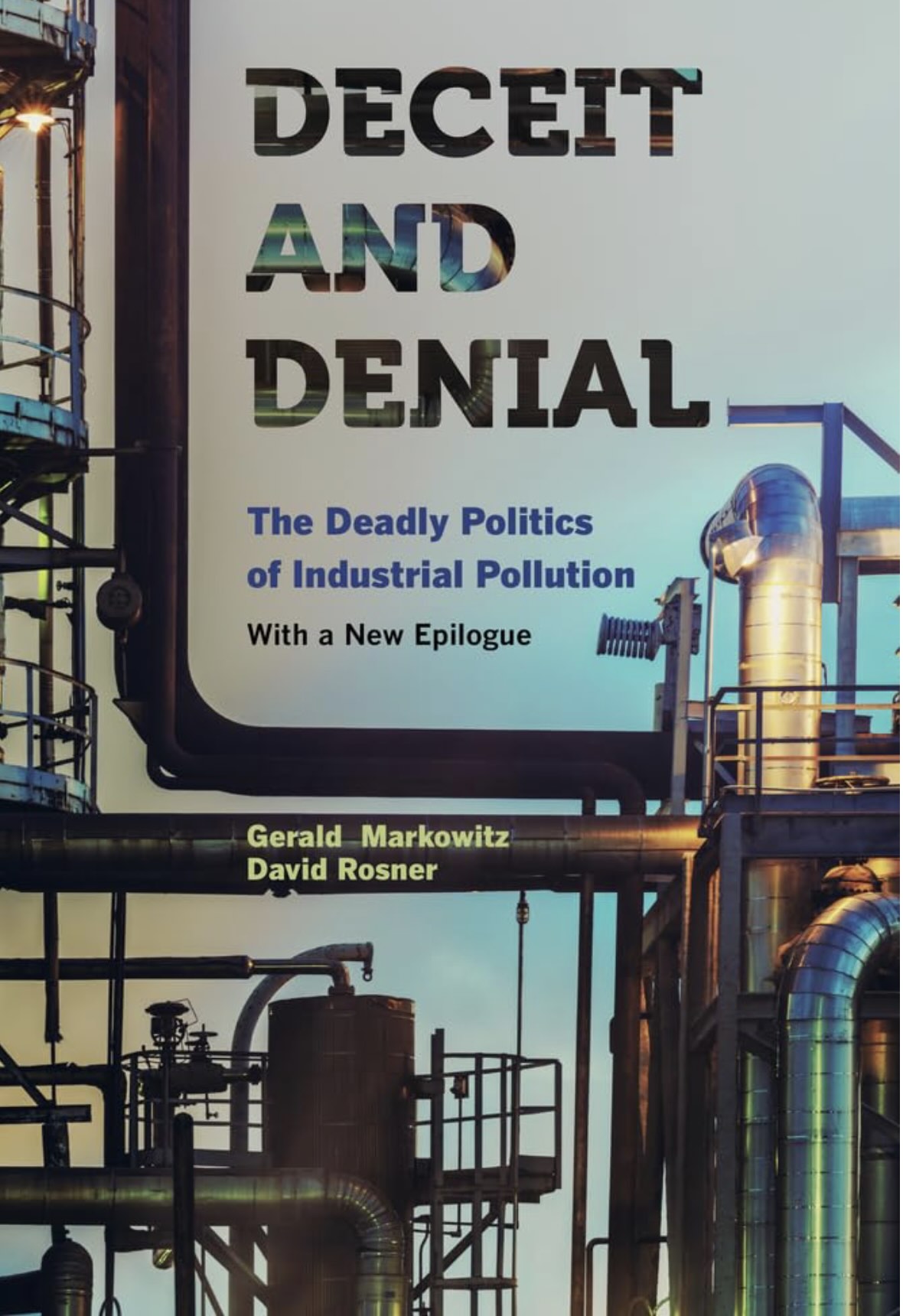
In addition to work on how businesses hid the truth about their products (in the book Deceit and Denial for example) they also wrote about the social activism of the great couple Kenneth and Mamie Clark. The Clarks, one might remember, did the famous doll study that was used by the Supreme Court in its ruling against segregated schools. They also founded a wonderful institution, the Northside Center for child development, which David and Jerry described in Children Race and Power.
By Susan Van Haitsma / The Rag Blog / June 15, 2026
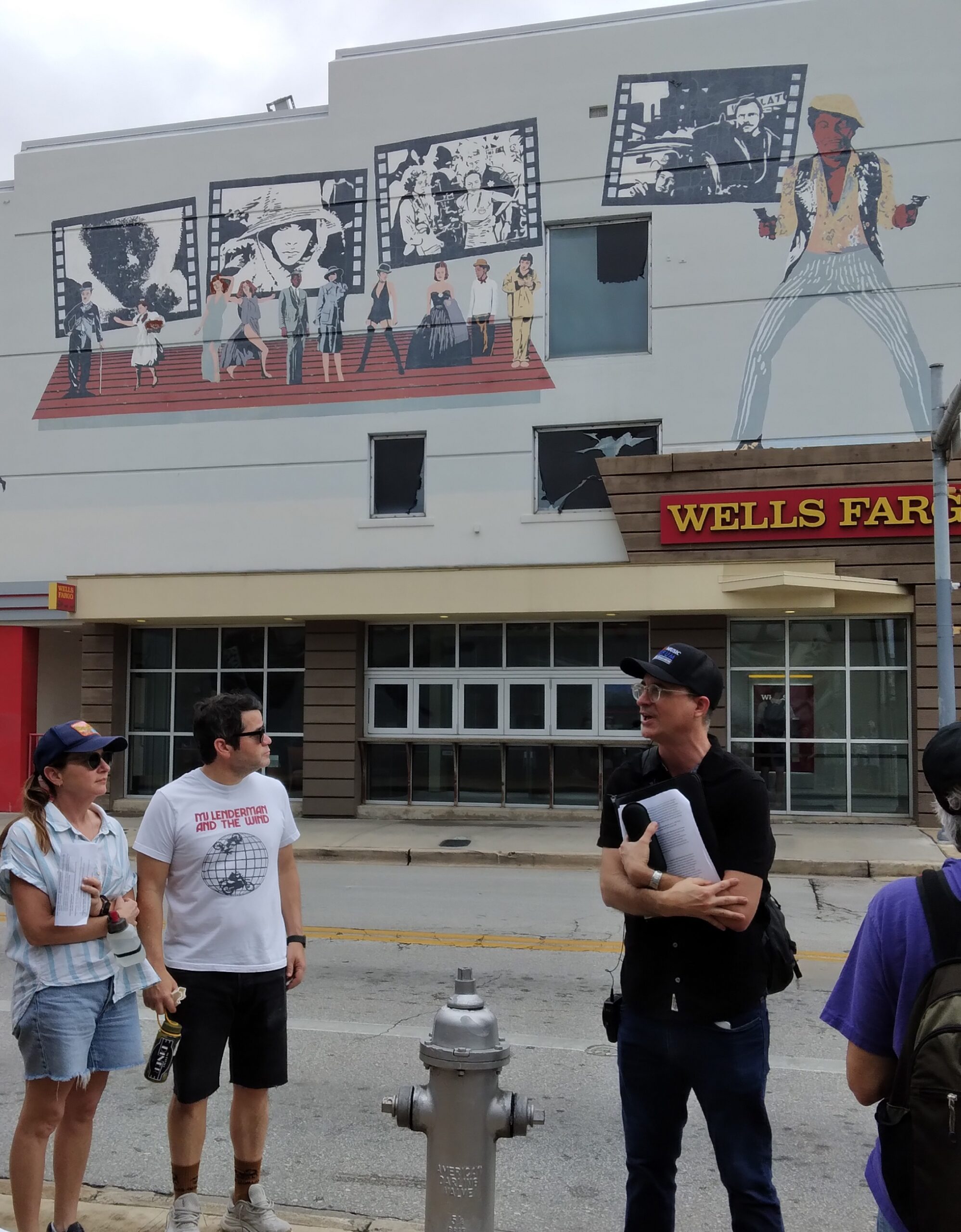
Mockingbird Saloon mural of the Violators featuring Jesse Sublett and Kathy Valentine; Photo by Susan Van Haitsma.
I love learning about the place, people and history of where I live. I often wonder about the people who once walked where I walk and who lived where I live in the vibrant central city of Austin, Texas. On June 6, I and a small group of others had the opportunity to learn more about the cultural history of the main Drag bordering the west side of the University of Texas campus, a primary artery that I walk or bus almost every day. A walking tour sponsored by Preservation Austin and led by Texas State music historian, Jason Mellard, made history come alive as we visited a string of venues where Austin earned its claim as the Live Music Capital of the World.
For this tour, “Down on the Drag: Sites of Austin Music History,” Jason put together an excellent itinerary of stops along Guadalupe Street that began at the iconic 23rd Street mural by Kerry Awn, wound briefly through the UT campus and finished inside legendary Antone’s Records at 29th Street. Jason arranged a surprise appearance at the store by longtime music impresario Eddie Wilson and musician/Antone’s Records co-owner, Eve Monsees, representing our remarkable span of Austin-born music.
23rd Street Mural; Photo by Susan Van Haitsma.
Built on his careful research, Jason’s animated narration at every stop wove together the evolution of Austin’s music scene with what was happening in student and community activism on and off campus. Austin’s civil rights, anti-war and student free-speech movements were intertwined with what musicians and music venues were doing. A handout compiled by Preservation Austin also listed dates and architectural information about the venues themselves – some buildings no longer in existence and others replaced or restored.
As we stopped in front of the restored Hogg Auditorium on the UT campus, Jason called up for us on his phone an excerpt from the final public performance recorded there by legendary blues artist, Lead Belly (Huddie Ledbetter) on June 15, 1949. Lead Belly’s music career was significantly influenced by early Texas ethnomusicologists, John Lomax and his son, Alan Lomax (born in Austin in 1915), who studied and preserved much Texas music history. Jason tied the 1949 Lead Belly performance to the racial discrimination court battle being fought at that time by UT law school applicant, Heman Sweatt. Seven years later, UT administrators, pressured by State legislators, disallowed one of UT’s first Black music students, Barbara Smith Conrad from performing opposite a white student in an operatic role in Hogg Auditorium in 1957. The university’s decision ignited widespread protest. Harry Belafonte offered Conrad funding to transfer to any other school, but Conrad decided to stay at UT, graduated and went on to have an acclaimed operatic career. In 2009, the Texas Legislature officially apologized to Conrad through a resolution in her honor. The documentary film, “When I Rise,” produced by the Briscoe Center in 2010 recounts her triumphal story.
The University YMCA, formerly at 2200 Guadalupe (where the massive Church of Scientology stands now) was a staging ground for desegregation action, and the Y’s second location at 2330 Guadalupe was a beehive of student counter-culture activity. The second floor housed The Rag offices for several years, a women’s reproductive rights hotline, draft counseling services and the Austin Women’s Center. Just up the Drag, the Methodist Student Center (now a parking lot), was likewise a hub of civil rights, peace and justice activity.
Tour in front of Carlos Lowry’s Varsity Mural; Photo by Susan Van Haitsma.
Our tour group stepped along the sidewalks where desegregation actions had happened in the 1950s and 1960s, including pickets and “stand-ins” at the Varsity Theatre. Jason stopped to discuss the mural featuring Jimmy Cliff painted on the Varsity’s (now a CVS) south side by local artist, activist and music documentarian, Carlos Lowry. Carlos had also designed posters for the punk band, The Dicks, which tied in with our next stop at the site of the former Raul’s club at 2610 Guadalupe, where The Dicks and other early punk bands performed in the 1970’s. Raul’s had taken the place of a segregationist bar, Roy’s Lounge, which had defied open accommodations law and later closed partly due to student pickets in 1965.
As we walked up to view a mural on the side of the former Raul’s depicting members of early Austin punk band, The Violators, Jason introduced a special guest: one of those band members, in the present, Jesse Sublett. Jesse, a handsome 72, his once-punkish voice subdued by a bout with throat cancer, shared stories from his Raul’s days. He explained that the venue and the punk scene helped create more GLBTQIA+ openness in Austin and beyond through the 1970s and 1980s, and he recalled jamming with Patti Smith at Raul’s when she toured in Austin. Jesse and his later band, The Skunks, toured widely, headlining shows and opening for other punk bands like The Clash and The Ramones.
Members of The Clash were influenced by Joe Ely and his hard-driving rockabilly music, and they came to Austin to perform at the Armadillo World Headquarters in 1979 with Joe Ely opening, and again in 1982 at the City Coliseum. In fact, as Jason moved our tour group along to the next stop in a parking lot off 29th Street, he passed around a photo taken from the parking lot in 1982 showing that a scene in the Austin-shot music video for “Rock the Casbah” was filmed right there during a break between The Clash’s two nights at the Coliseum.
Hole in the Wall mural; Photo by Susan Van Haitsma.
Across from where we stood, the newly rebuilt Texas French Bread was almost ready to reopen. Its earlier incarnations included The Rome Inn, an Italian restaurant that became a blues venue and hosted Austin legends as they were just starting out, including Stevie Ray Vaughan, The Fabulous Thunderbirds, and Paul Ray and The Cobras. The building later had a brief life as punk club called Studio 29, and we learned that the convenience store, Friendly Rio Market, in whose parking lot we were standing, transforms on occasion into a punk music venue at night.
With his well of knowledge, Jason made informed connections with every stop on the tour, even as he kept us on track, elaborating as time allowed. He also arranged for a mid-tour break for refreshments and shade in the back room of The Hole in the Wall, the beloved music venue established in 1974 at 2538 Guadalupe and considered a performance incubator for Austin natives like Nanci Griffith, one of my favorite singer-songwriters. I had not been inside the Hole in the Wall for years, but I felt immediately at home again amidst the crazy collection of memorabilia, artwork and band posters that cover the walls, inside and out. The friendly bartender and the new owner of the club welcomed our group and reaffirmed my sense that the creative, humane spirit that music and activism have given to Austin will live on.
Susan Van Haitsma is an artist, a photographer, and an Austin peace activist. She has been a contributor to The Rag Blog for many years. See her recent post about CodePink Austin’s archival collection at the Austin History Center.
This article appeared in Alice Embree’s Substack on May 18, 2026. An interview with James Russell, mentioned below, will air on Rag Radio 91.7 FM, 2-3 p.m. Central, Friday, June 12, 2026.
President Lyndon Johnson signed Medicare into law in 1965, the same year Johnson signed the Voting Rights Act into law. While most people know the civil rights movement prompted the Voting Rights Act, few people know the significant role African American doctors played in advocating for Medicare. Even fewer know that Medicare led to desegregation of hospitals. For that history, see the excellent documentary, The Power to Heal.
I didn’t pay much attention to Medicare until I qualified for it. When “Medicare for All” became shorthand for universal healthcare, a lot of more people took note – including younger people inspired by Senator Bernie Sanders’ presidential campaign.
But cynicism is a powerful drug right in today’s world. Many people younger than I am – that’s almost everybody – think Medicare will be gone by the time they qualify. Meanwhile, private insurance has barreled into the Medicare arena, lobbying for Congressional favors and inundating airwaves with ads pushing Medicare Advantage.
Many Medicare recipients find out that Medicare Advantage is a Disadvantage when they encounter serious illness. That’s what a friend, James W. Russell, found out.
James W. Russell
Jim Russell is a civil rights veteran who participated in Tulsa sit-ins after graduating from high school. He was a member, as I was, of Students for a Democratic Society (SDS). It’s through the SDS connection that I’ve kept up with him.
Rusell has published ten books, including The Labor Guide to Retirement Plans: For Union Organizers and Employees, Social Insecurity: 401(k)s and the Retirement Crisis; Double Standard: Social Policy in Europe and the United States; and Escape from Texas: A Novel of Slavery and the Texas War of Independence.
Russell has taught at universities in the U.S. and as a Fulbright professor in Mexico and the Czech Republic. It was his stint teaching at Eastern Connecticut State University that brought him into Connecticut retirement system and their health care benefits. As a retiree, he had only one option, Medicare Advantage.
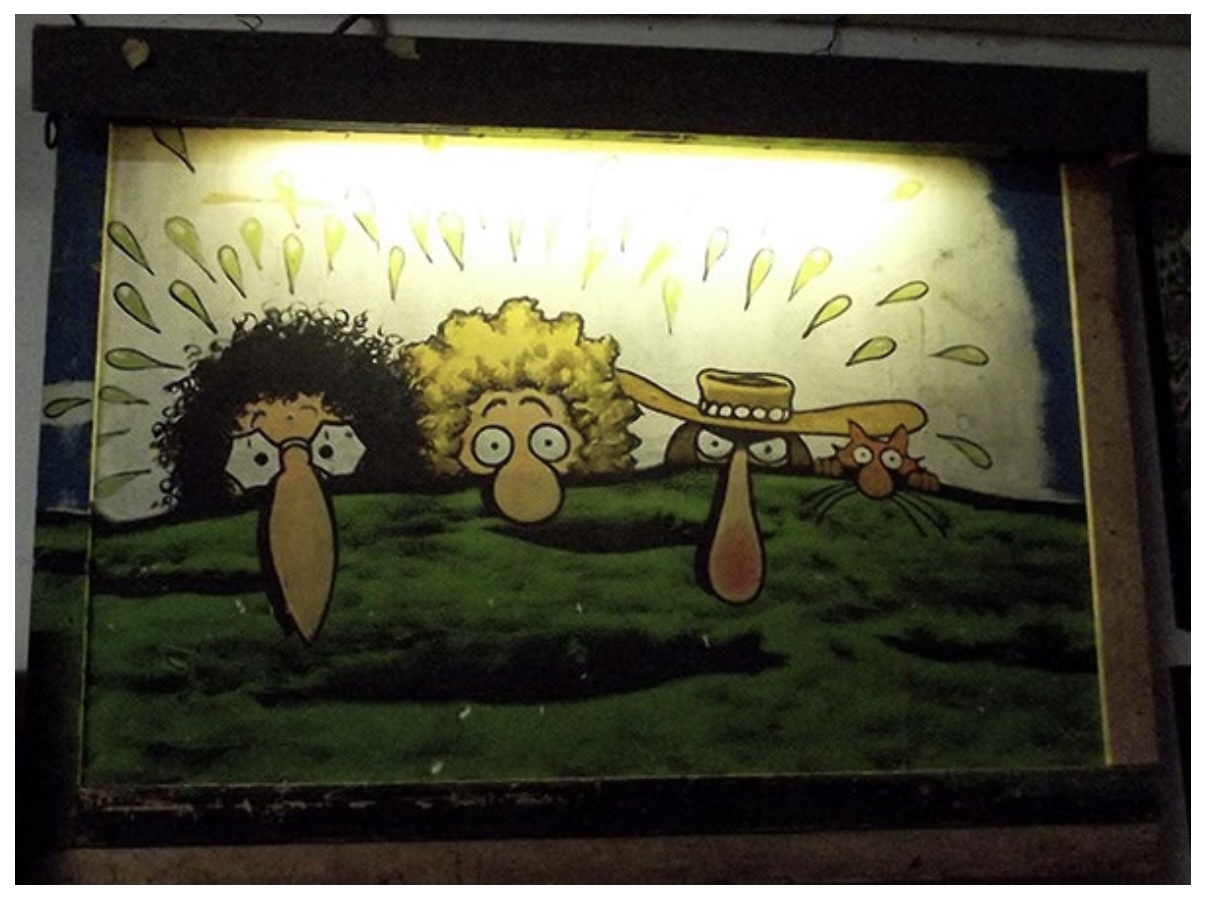
Painting of the Freak Brothers on the wall at the Armadillo World Headquarters.
By Austin Museum of Popular Culture /The Rag Blog / June 5, 2026
The Austin Museum of Popular Culture will launch its Retrospective of Underground Comix Pioneer Gilbert Shelton on Sunday, June 7, 2026.
When: June 7 – July 19, 2026 Where: 506 N. Congress Avenue, Austin, TX 78701
Listen to Rag Radio interview. Host Thorne Dreyer talks with Austin Museum of Popular Culture’s Freddie Krc and Leea Mechling and Gilbert Shelton’s nephew Gavin Shelton about the retrospective exhibit on KOOP 91.7 FM.
“Poddy Rules The World! Gilbert Shelton’s Underground Comix and Art” features original posters, drawings, comic panels, and Sunday afternoon talks.
The summer exhibition will showcase the influential poster art and comic books of Gilbert Shelton, a key figure in the formative years of Austin’s culture change in the 1960s and 70s.
Poster for Vulcan Gas Company, 316 Congress, November 17-18, 1967.
Titled Poddy Rules The World! Gilbert Shelton’s Underground Comix and Art, this program will offer a compelling opportunity to revisit a pivotal moment in Austin’s cultural history. The exhibition will not only celebrate the artistic achievements of Shelton but also provide a valuable historical document of a vibrant and influential era. Included will be original posters, drawings, comic book panels, photographs and screens rolling information and imagery. Interpretive materials will be used to educate the public about what they are viewing and give context to the work. Sunday afternoons will be used to hold panel discussions and talks about Shelton’s work and the evolution of cultural mores via comic books from past to present day.
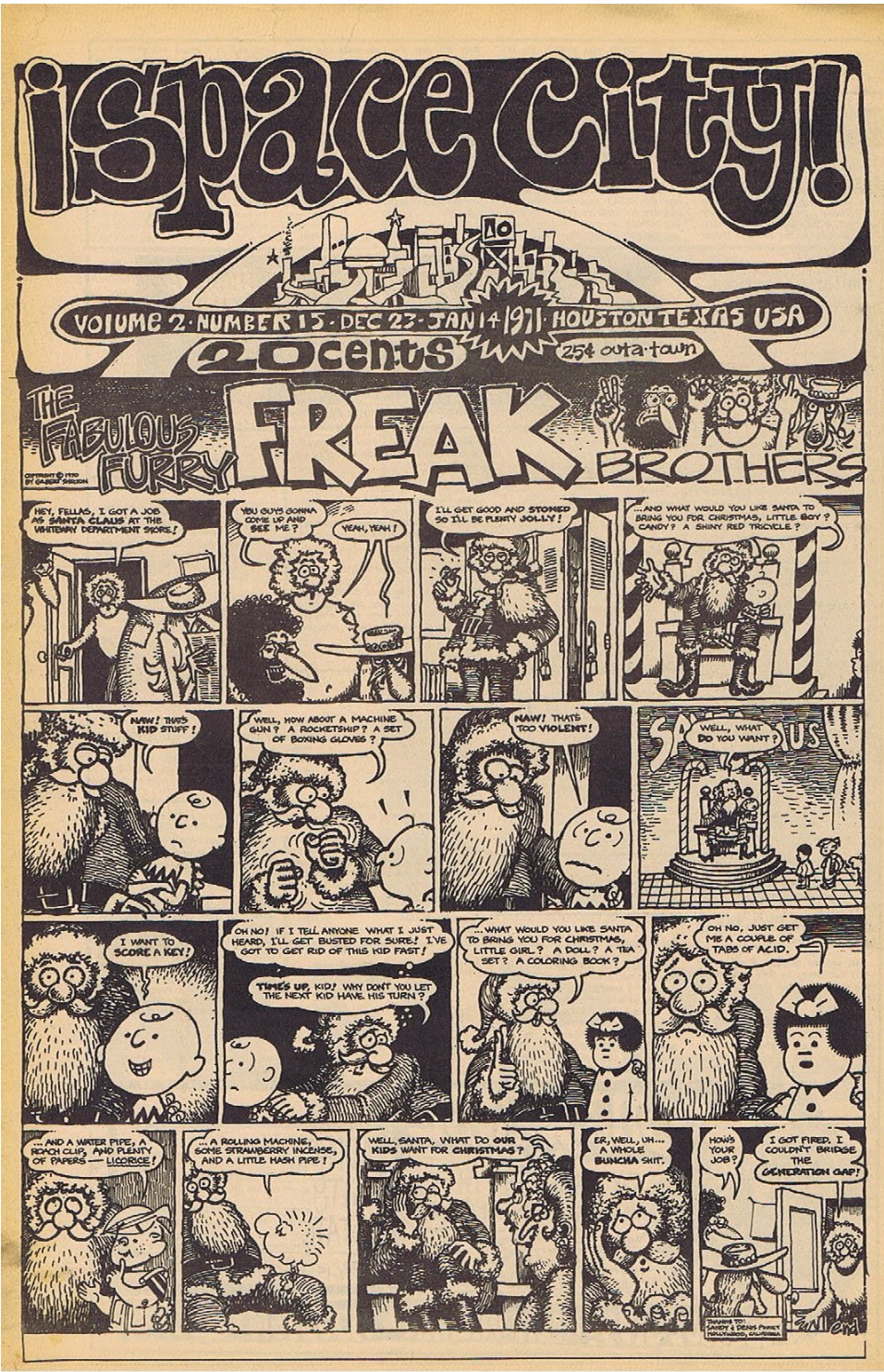
Gilbert Shelton is a highly significant American cartoonist known for being a key figure in the underground comix movement of the 1960s and 1970s. His satirical, humorous, and countercultural comics, most notably The Fabulous Furry Freak Brothers, captured the spirit of the era and have had a lasting influence on subsequent generations of cartoonists and animators.
Cover of Space City!,December 23, 1970 – January 1, 1971.
“June is bustin’ out all over,” says a memorable song composed in the 1940s for the musical Carousel, but more recently, June has become known as “Pride Month.” For those of you who are wondering why, here is my explanation.
“Pride,” in this case, is an abbreviation of “gay pride” or perhaps “lesbian and gay pride,” or “GLBTQ+ pride.” It started with the first of the now traditional “pride marches,” and that one, called Christopher Street Liberation Day March, took place in New York City in June of 1970. That march commemorated the Stonewall Riots, which I prefer to call the Stonewall Uprising.
The Stonewall was a popular gay bar on Christopher Street in New York’s Greenwich Village. I went there myself rather often in the late 1960s. It was a place where same-sex couples could dance together. It was considered a “private club” and was owned by Mafia elements obliged to make police payoffs as part of doing business. When payoffs were delayed or insufficient, police raided the bars, smashing bottles and taking patrons into custody. When such a raid happened on June 28, 1969, patrons valiantly and noisily fought back and many were arrested.
Very soon thereafter, gay men and lesbians formed the Gay Liberation Front, vowing to continue and expand a quest for dignity launched decades earlier by the so-called Homophile Movement. These brave activists declared it was time to “come out of the closet,” to stop hiding in shame. Yes, that’s a key concept because the opposite of shame is pride.
What caused that shame to be such a powerful force on the psyche of millions of men and women, of all ages, in all nations? There were many sources, perhaps the most important one being modern medical science. The psychiatric profession held, with great certainty, that homosexuality was a mental illness. Some of those doctors used electroshock therapy and other cruel methods to “treat” homosexuality. Others concluded that Freudian psychoanalysis could do the trick. Some psychiatrists wrote books on the topic that helped poison the minds of millions of readers, including some homosexuals seeking answers.
Religion has been another big factor. Christian, Jewish and Muslim clergy maintained that homosexuality was a terrible sin, an affront to God.
Legislators participated in the process, passing laws to make oral and anal sex serious crimes, often called “crimes against nature.” There were lesser laws such as the New York City statute that made it a crime to serve alcohol to a homosexual, and laws that made it illegal to wear garments usually associated with the opposite gender.
Since the majority of homosexuals did not get married and bear children, there was an element of shame produced and projected within the nuclear family — for example, the disappointment that parents might feel upon learning that a son or daughter would not be following the expected pathway to marriage and childbearing. Gay people coming out to parents often found mother and/or father bursting into tears, or blaming themselves for doing something “wrong.”
“Say it loud, gay is proud!” was one of the first and most popular chants at gay marches. Pride didn’t come easily to everyone. At some marches, there were schoolteachers and others who came with paper bags over their heads. An earlier example of such hiding took place in a 1967 television news show when CBS anchor Mike Wallace interviewed a gay man obscured by a shadow cast by a potted palm.
For most gay men and lesbians, coming out is a process that takes time, with many steps, starting with self-awareness. For me, an understanding of the origin of my negative feelings (“shame”) did not take place until I learned from other gay people who gathered to spread a message of liberation based on truth and self-awareness. The psychiatric profession finally came to declare that homosexuality was a variance in sexual behavior, not a sickness.
A friend of mine who is a psychiatrist (and who is not gay) commented to me, “It was just a few years after Stonewall that the American Psychiatric Association removed its designation of homosexuality as a disorder, in 1973. More than half a century on, the struggle is far from over, with religious fundamentalists and political reactionaries still urging intolerance. The affirmation of this commemoration remains vitally necessary.”
Many religious leaders agreed there could be true love (and love of God), within same-sex relationships, though other Bible-thumping clergy continued to sow the seeds of hatred. With the help of lawyers and judges, laws were taken off the books, and same-sex marriage was pronounced legal by the U.S. Supreme Court in 2015.
We enjoy Pride Month now in a continued effort to expand and continue that important message of pride, and to celebrate the freedom we have achieved and wish to maintain.
We have allies. When I attended a Pride celebration last year at the venue near my home in rural Massachusetts, hosted by its heterosexual owner, I was pleased to see several heterosexual friends and neighbors in attendance. They had every right to be there, supporting gay people, and while I am proud to be true to myself, I am also proud of a community that welcomes me and my gay brothers and sisters every month of the year, not only in June. It’s still fun and meaningful to have a pride dance or a pride march — or an article in the progressive voice of The Rag Blog.
[Allen Young has lived in rural North Central Massachusetts since 1973 and is an active member of several local environmental organizations. Young worked for Liberation News Service in Washington, D.C., and New York City, from 1967 to 1970. He has been an activist-writer in the New Left and gay liberation movements, including numerous items published at The Rag Blog. He is author or editor of 15 books, including his 2018 autobiography, Left, Gay & Green; A Writer’s Life.]
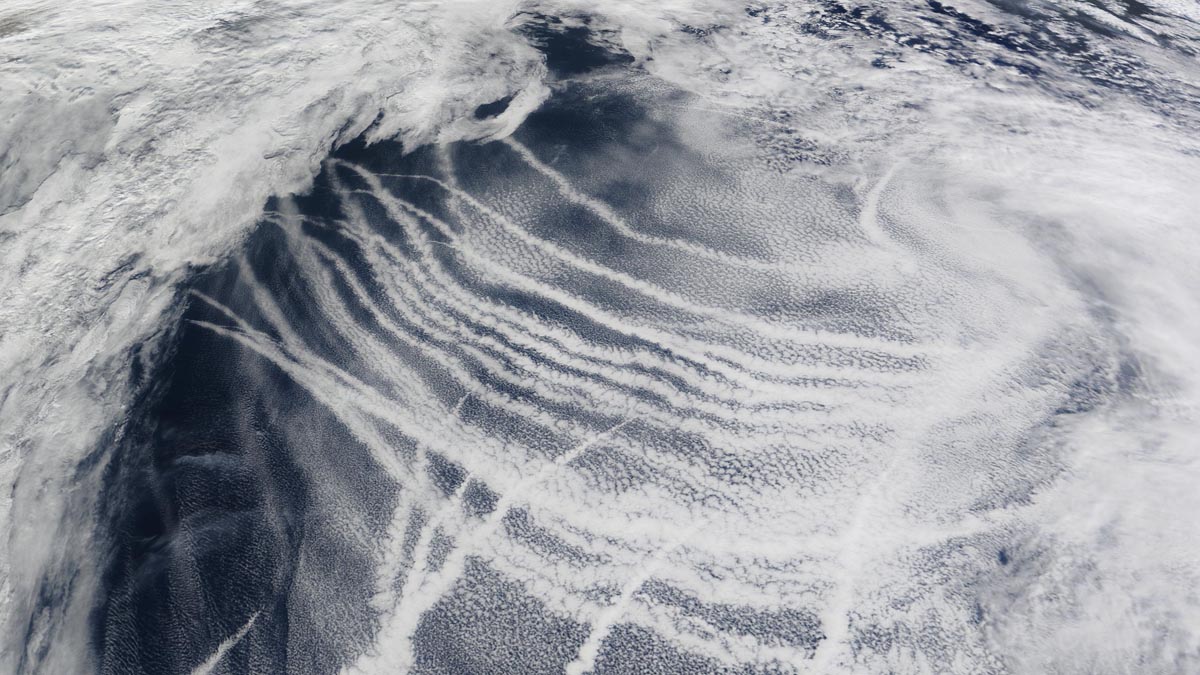
Ship trails in the North Pacific cool our climate through the oldest climate pollution treatment (geoengineering) strategy humans have been practicing for 150 years. Image: NASA.
Summary: Geonegineering is not as it seems to our current climate culture. Geoengineering is the bad things we have done to Mother Earth by burning fossil fuels and clearing half of the world’s forests. Geoengineering in our current climate culture should actually be called climate pollution treatment, because what we need to do to cool our climate is not a bad thing.
~ ~ ~
Most Earth systems are now degrading from the effects of human-caused warming. Tropical, high altitude, and boreal forests, permafrost, ice sheets, sea ice, ocean currents, and corals are now degrading and most of these have begun to emit millennia of stored carbon as greenhouse gases because of this degradation. The damage to these systems does not stop, ever, unless the thing that caused the degradation to begin is removed. Eliminating human-caused greenhouse gas emissions from fossil fuels, and from land use and abuse, and creating net zero climate pollution emissions (greenhouse gases) tomorrow morning — only — reduces future warming, it does nothing to remove the warming effects from current warming and past emissions that have accumulated in our sky, that have caused our Earth systems to begin to degrade. This degradation must be separated from other human-caused degradation forces. It is entirely from warming effects related to heat and drought, and very important: If the warming effects are not removed by about mid-century for most of our systems that are currently in degradation, the damages to those systems and ecologies will become so profound that even if the warming effects are removed, the system would not be able to stabilize and recover.
This is climate tipping, or climate tipping elements responses. It is now active because of three decades of failure to limit greenhouse gas emissions, and it is irreversible with existential outcomes if our climate is not restored, or cooled from today, back to within the evolutionary boundaries our Earth systems before these collapse become irreversible. This is why we have to ungineer our world from the effects of excess climate pollution emitted by humans, so that we can have the time to remove the excess greenhouse gases from our atmosphere that have cause the degradation to begin, so that we then have time to create a sustainable fossil fuel and greenhouse gas emissions culture, so we and our children can be safe.
What is this un-engineering, this ungineering? Most call it geoengineering, which it is not. This is a pretty bold statement considering the breadth of thought today, on exactly what geoengineering is:
Intergovernmental Panel on Climate Change – Geoengineering refers to a broad set of methods and technologies that aim to deliberately alter the climate system in order to alleviate the impacts of climate change.
EPA – Geoengineering encompasses a broad range of activities, including those that intentionally attempt to cool the Earth or remove certain gases from the atmosphere.
Royal Society – Geoengineering proposals aim to intervene in the climate system by deliberately modifying the Earth’s energy balance to reduce increases of temperature and eventually stabilize temperature at a lower level than would otherwise be attained.
Center for International Environmental Law – Geoengineering refers to large or planetary-scale interventions in the Earth’s atmosphere, oceans, and soils with the intention of counteracting only some of the effects of climate change.
So why the bold statement that geoengineering is not the deliberate manipulation of our climate systems to mitigate for the effects of human-caused greenhouse gas pollution? Let’s look at a few other discussions of geoengineering:
Collins – Geoengineering is the use of scientific processes to improve the environment, especially to stop the Earth becoming any hotter.
Environmental Justice – Geoengineering is the intentional, large-scale technological manipulation of the Earth’s systems.
Los Alamos Labs – tells us about the new possibilities of terraforming Mars with advances in geoengineering.
The Journal Science – An article form August 2024, Terraforming Mars could be easier than scientists thought, talks about planetary-scale engineering on Mars.
The Institute for Climate and Sustainable Growth at the University of Chicago, in an article published in The Economist – talks about injecting vast quantities of greenhouse gases into the Martian atmosphere to create a human-habitable planet.
“If we want to talk about the craziest-sounding ideas dreamt up by mad scientists with disheveled hair and demented glints in their eyes, geoengineering would admirably fit the bill. This is the stuff that pulpy science fiction is made of, when horrible accidents engineered by technology-obsessed scientists cast humanity into eternal doom. Yet, geoengineering is now seriously being considered by top scientists and policy makers. It also has a long history that is permeated by some of the most brilliant minds of the twentieth century. Science fiction it may sound like, but it’s being treated as serious science by serious people. Some have predicted that the issue of geoengineering will be catapulted in a few years into one of the most visible public debates of our times, regularly bandied about in the mainstream media. It will become a topic rich with scientific, political, social and moral dilemmas.” This passage is from The Lindau Nobel Laureate Meetings, established in 1951, where 30 to 40 Nobel Laureates meet in Lindau, Germany, with up to 600 aspiring undergrads, graduate students, and PhD candidates, so as to inspire the next generation of scientists every year.
Nobel Laureate Paul Crutzen frequented the Lindau Laureate Meetings. He was awarded the Nobel Prize in Chemistry in 1995 for discovery of the mechanisms that deplete stratospheric Ozone. In 2006 in the journal Climatic Change, Crutzen published, Albedo Enhancement by Stratospheric Sulfur Injections: A Contribution to Resolve a Policy Dilemma? https://link.springer.com/article/10.1007/s10584-006-9101-y#preview This essay was not the first on “geo-engineering,” as Crutzen wrote the term, but because of his Nobel status, it brought attention to the most dominant concept of geoengineering today of stratospheric aerosol injection. This concept is the same as happens with volcanoes and curiously, with the burning of fossil fuels. When naturally occurring sulfur in fossil fuels is burned, or released from volcanic eruptions, it produces sulfate aerosols similar to smoke, only they reflect sunlight rather than absorb it.
Sulfur emissions created “global dimming,” and literally caused China to begin regulating air pollution in a serious way because of the Beijing Olympics in 2008. Volcanic eruptions have been demonstrated to cool our atmosphere by at least a half degree C, enough to create years without summer in northern latitudes. The aerosols created from burning fossil fuels are also one of the main components of air pollution that today, account for 7 to 8 million deaths per year from respiratory disease. In the U.S. and Western Europe in the 1960s, this air pollution became so bad that laws were enacted (The Clean Air Act in the U.S.) that limited sulfur in fossil fuels. The curiosity part though, is that the reflection of sunlight by sulfate aerosols cools our climate, in direct contradiction to the global warming gases emitted by burning the same fossil fuels.
The cooling from sulfate aerosols is almost exactly half of the warming from excess carbon dioxide emitted by humans from fossil fuels and land use and abuse, and a third of total warming from all warming forcings including methane, N2O, refrigerants, water vapor, and ozone. Using sulfate aerosols to cool Earth then, is something humans have been doing since we began burning fossil fuels, or volcanoes have been doing since the beginning of time. Because of the negative side effects of sulfates, the West’s began regulating sulfur in fossil fuels generations ago, and this is now being repeated by China and India in quantities far larger than what was done in the West. We can treat a lot of warming by temporarily relaxing sulfur regulations, but Injecting sulfur into the stratosphere comes with a distinct advantage over that at near land elevations. Pound for pound, only about 2 percent of the sulfur emitted near the Earth’s surface, would create similar cooling if injected into the stratosphere, virtually eliminating side effects of respiratory disease and others like acid rain and ocean acidification. The reason is simple. Sunlight has a much shorter path reflected out of our atmosphere if reflected very high, where if reflected very low, it can be scattered by other aerosols on the way back into space, keeping it here on Earth where it can cause warming.
There is even a shovel ready sulfur aerosol injection strategy that could be implemented immediately and would cool our climate by at least 0.2 degrees C. This would be the temporary reversal of new International Maritime Organization’s new sulfur limits on ship fuels. These aerosols enhance ships’ trails, similar to condensation trails from jet aircraft only at very low altitudes just above the sea surface from ships’ stacks. These reflective aerosols create brighter clouds and enhance formation of clouds in ships trails shown in the cover image to this article. These then reflect more light harmlessly back into space, instead of allowing that light to hit the ocean where it is absorbed creating warming that can be trapped by the greenhouse effect.
Up to 90 percent of sunlight is reflected by bright-white clouds, versus up to 90 percent absorbed by the dark ocean. The difference between ships’ air pollution and that over land from autos and energy generation from fossil fuels is that at very low altitudes, the aerosols drop out of the atmosphere from gravity or rainfall in a few days, where in the stratosphere they can last a few years. This has a great advantages: the air pollution from ships is mostly gone by the time it reaches land. By shifting to low sulfur fuels 200 miles from land, the advantage is enhanced further. This type of “geoengineering” btw, is called marine cloud brightening and, is it really geoengineering?
Our current climate culture is bent on believing that geoengineering is bad, or it has a distinct possibility of being bad because of its supposedly unknown attributes. It is believed to be novel, never before tried, and full of unanticipated side effects that could cause harm. It is believed that much research is needed to identify these shortcomings and understand the side effects. Observation of this so-called geoengineering however, shows that yes, there are risks. These risks are truly unknown with many niche geoengineering strategies like space umbrellas, but risks are known with sulfur aerosols. Up to 8 million people are killed every year from respiratory disease caused by low altitude sulfur air pollution. But what are the risks of not using these strategies to cool our climate?
In the introduction to this article, it is clear that little time remains to restore our climate back to within the evolutionary boundaries of our degrading Earth systems before they become so degraded they cannot stabilize and collapse or tip irreversibly. Emissions reductions have proved impossible so far, because over the last 35 years of trying to reduce them, the concentration of carbon dioxide in our atmosphere has instead doubled, not been reduced. The warming from this failure to reduce emissions is now responsible for these climate tipping activations of Earth systems degradation, that if allowed to complete and become irreversible, risk the re-emissions stored carbon (greenhouse gases) of more than ten times all the greenhouse gases that humans have ever emitted.
Atmospheric removal of greenhouse gases accumulated in our sky is the only way to reduce the warming effects in time frames that matter to climate tipping, and there is a significant risk that this time is too long to prevent the completion of Earth systems collapses. Because greenhouse gas emissions elimination only limits further warming, there is a risk that if we do not use strategies to rapidly and temporarily cool our atmosphere, the systems our advanced human civilization relies upon for its existence could fail. We therefore have a responsibility to the future of humankind to do something to treat this heat pollution that we have created that threatens the existence of our Earth systems and their dependent subsystems like humanity. So, what then are we afraid of?
“Geoengineering” is a compound word derived from the Greek prefix geo- (from gē or gaia), meaning “Earth,“ and engineering, from the American Council of Engineering Companies, “Engineering is the art of the possible. It’s applying skill and creative thinking to solving the world’s biggest challenges. It’s seeing what isn’t so and finding ways to make it so.”
Geoengineering, as defined by many, is the manipulation of our bio- and geosphere that is widely believed to be bad. If bad is defined by risk, geoengineering then, is obviously the burning of fossil fuels and release of greenhouse gases and the destruction of half of Earth’s forests, that has created the bad outcome of global warming that now threatens humanity because of the imminent failure of many of Earth’s systems.
What if we looked at our climate problem as one of a pollution problem? After all, global warming gases are emitted just like any other air pollution, and the sulfur pollution emitted right alongside of carbon dioxide from burning fossil fuels has been widely regulated since the 1970s. What if this was (and is) actually a pollution problem? Our culture has been treating pollution for thousands of years. What if we could simply treat the global warming pollution? Of course we can, and the treatment is the same concept as the oldest pollution treatment known to humans. This strategy is dispersion, or more commonly, dilution. Remember, “the solution to pollution is dilution?” This is dispersion. Atmospheric dispersion is a very important process in regulating air quality. Tall stacks releasing pollutants high above the ground were the predominant form dispersion or dilution “treatment” until the late 1970s. Fenceline monitoring receptors allow pollution emissions from processes today, if they are diluted enough at the fenceline to meet regulatory requirements.
Dilution of human wastewater is almost certainly the oldest pollution treatment strategy known, perfected by Romans, by diluting their human sewage in streams that pass through Roman cities. Today we call this, “Combined sewers.” Over 700 combined sewer discharges, where human waste and stormwater runoff are mixed to dilute the sewage, are still in use in the U.S. today.
Atmospheric cooling, or treatment of heat pollution, uses the oldest pollution treatment strategy in the world of dilution. It is the same concept that electrical generation facilities and industry use to treat their excess heat pollution in cooling towers, reservoirs, lakes, and oceans.
Now the concepts are reversed. Geoengineering is obviously the bad thing we have done to Mother Earth via the burning of fossil fuels, agriculture and land abuses. This geoengineering has not only caused global warming that has now created irreversibly existential outcomes unless we restore our climate rapidly, but it has vastly reduced the fertility of Earth’s soils and oceans, making artificial fertilizers mandatory for the continuance of the human civilization. Hundreds of thousands of species have been driven to extinction because of humans, and a million, or half that remain, are at risk of extinction. These things have been caused by humans geoengineering our planet. It has been caused by the pollution that we have created, or the forests we have cut, or the land we have raped, or the oceans we have fouled and overfished. This is geoengineering.
Pollution treatment is what must be done to forestall the inevitable Earth systems collapses so that we have time to remove the excess climate pollution from our atmosphere, and so that we have time to create a truly sustainable fossil fuels culture. Pollution treatment is what humans do to achieve the goals we have, to create the things we need; then we understand that we must treat that pollution do we can be safe because, we need those things, or we need to achieve those goals. Pollution treatment is what has allowed our culture to take advantage of fossil fuels to grow from 1 billion to 8 billion souls.
Aerosol cooling is pollution treatment. It is dilution, pure and simple. Aerosols reflect light back into space before it can create heat. It is the dilution of heat pollution, like the oldest pollution treatment strategy known to humans.
We know exactly how many people sulfur aerosols kill every year, and we know how to reduce the effects of sulfur aerosols pollution. We also know that our Earth systems will collapse by mid-century, and we know that without the Earth systems that our advanced human culture evolved with, the human race itself is at risk, just like any other systems whose evolutionary boundary conditions have been exceeded.
We need to rethink the way we think about pollution treatment and geoengineering. Pollution treatment is good; geoengineering is the nasty things we have done to this planet that now require we treat the climate pollution we have been emitting for over 200 years.
~ ~ ~
Nobel Laureate Paul Crutzen frequented the Lindau Laureate Meetings. He was awarded the Nobel Prize in Chemistry in 1995 for discovery of the mechanisms that deplete stratospheric Ozone. In 2006 in the journal Climatic Change, Crutzen published, Albedo Enhancement by Stratospheric Sulfur Injections: A Contribution to Resolve a Policy Dilemma? https://link.springer.com/article/10.1007/s10584-006-9101-y#preview This essay was not the first on “geo-engineering,” as Crutzen wrote the term, but because of his Nobel status, it brought attention to the most dominant concept of geoengineering today of stratospheric aerosol injection. This concept is the same as happens with volcanoes and curiously, with the burning of fossil fuels. When naturally occurring sulfur in fossil fuels is burned, or released from volcanic eruptions, it produces sulfate aerosols similar to smoke, only they reflect sunlight rather than absorb it.
Sulfur emissions created “global dimming,” and literally caused China to begin regulating air pollution in a serious way because of the Beijing Olympics in 2008. Volcanic eruptions have been demonstrated to cool our atmosphere by at least a half degree C, enough to create years without summer in northern latitudes. The aerosols created from burning fossil fuels are also one of the main components of air pollution that today, account for 7 to 8 million deaths per year from respiratory disease. In the U.S. and Western Europe in the 1960s, this air pollution became so bad that laws were enacted (The Clean Air Act in the U.S.) that limited sulfur in fossil fuels. The curiosity part though, is that the reflection of sunlight by sulfate aerosols cools our climate, in direct contradiction to the global warming gases emitted by burning the same fossil fuels.
The cooling from sulfate aerosols is almost exactly half of the warming from excess carbon dioxide emitted by humans from fossil fuels and land use and abuse, and a third of total warming from all warming forcings including methane, N2O, refrigerants, water vapor, and ozone. Using sulfate aerosols to cool Earth then, is something humans have been doing since we began burning fossil fuels, or volcanoes have been doing since the beginning of time. Because of the negative side effects of sulfates, the West’s began regulating sulfur in fossil fuels generations ago, and this is now being repeated by China and India in quantities far larger than what was done in the West. We can treat a lot of warming by temporarily relaxing sulfur regulations, but Injecting sulfur into the stratosphere comes with a distinct advantage over that at near land elevations. Pound for pound, only about 2 percent of the sulfur emitted near the Earth’s surface, would create similar cooling if injected into the stratosphere, virtually eliminating side effects of respiratory disease and others like acid rain and ocean acidification. The reason is simple. Sunlight has a much shorter path reflected out of our atmosphere if reflected very high, where if reflected very low, it can be scattered by other aerosols on the way back into space, keeping it here on Earth where it can cause warming.
There is even a shovel ready sulfur aerosol injection strategy that could be implemented immediately and would cool our climate by at least 0.2 degrees C. This would be the temporary reversal of new International Maritime Organization’s new sulfur limits on ship fuels. These aerosols enhance ships’ trails, similar to condensation trails from jet aircraft only at very low altitudes just above the sea surface from ships’ stacks. These reflective aerosols create brighter clouds and enhance formation of clouds in ships trails shown in the cover image to this article. These then reflect more light harmlessly back into space, instead of allowing that light to hit the ocean where it is absorbed creating warming that can be trapped by the greenhouse effect.
Up to 90 percent of sunlight is reflected by bright-white clouds, versus up to 90 percent absorbed by the dark ocean. The difference between ships’ air pollution and that over land from autos and energy generation from fossil fuels is that at very low altitudes, the aerosols drop out of the atmosphere from gravity or rainfall in a few days, where in the stratosphere they can last a few years. This has a great advantages: the air pollution from ships is mostly gone by the time it reaches land. By shifting to low sulfur fuels 200 miles from land, the advantage is enhanced further. This type of “geoengineering” btw, is called marine cloud brightening and, is it really geoengineering?
Our current climate culture is bent on believing that geoengineering is bad, or it has a distinct possibility of being bad because of its supposedly unknown attributes. It is believed to be novel, never before tried, and full of unanticipated side effects that could cause harm. It is believed that much research is needed to identify these shortcomings and understand the side effects. Observation of this so-called geoengineering however, shows that yes, there are risks. These risks are truly unknown with many niche geoengineering strategies like space umbrellas, but risks are known with sulfur aerosols. Up to 8 million people are killed every year from respiratory disease caused by low altitude sulfur air pollution. But what are the risks of not using these strategies to cool our climate?
In the introduction to this article, it is clear that little time remains to restore our climate back to within the evolutionary boundaries of our degrading Earth systems before they become so degraded they cannot stabilize and collapse or tip irreversibly. Emissions reductions have proved impossible so far, because over the last 35 years of trying to reduce them, the concentration of carbon dioxide in our atmosphere has instead doubled, not been reduced. The warming from this failure to reduce emissions is now responsible for these climate tipping activations of Earth systems degradation, that if allowed to complete and become irreversible, risk the re-emissions stored carbon (greenhouse gases,) of more than ten times all the greenhouse gases that humans have ever emitted.
Atmospheric removal of greenhouse gases accumulated in our sky is the only way to reduce the warming effects in time frames that matter to climate tipping, and there is a significant risk that this time is too long to prevent the completion of Earth systems collapses. Because greenhouse gas emissions elimination only limits further warming, there is a risk that if we do not use strategies to rapidly and temporarily cool our atmosphere, the systems our advanced human civilization relies upon for its existence could fail. We therefore have a responsibility to the future of humankind to do something to treat this heat pollution that we have created that threatens the existence of our Earth systems and their dependent subsystems like humanity. So, what then are we afraid of?
“Geoengineering” is a compound word derived from the Greek prefix geo- (from gē or gaia), meaning “Earth,“ and engineering, from the American Council of Engineering Companies, “Engineering is the art of the possible. It’s applying skill and creative thinking to solving the world’s biggest challenges. It’s seeing what isn’t so and finding ways to make it so.”
Geoengineering, as defined by many, is the manipulation of our bio- and geosphere that is widely believed to be bad. If bad is defined by risk, geoengineering then, is obviously the burning of fossil fuels and release of greenhouse gases and the destruction of half of Earth’s forests, that has created the bad outcome of global warming that now threatens humanity because of the imminent failure of many of Earth’s systems.
What if we looked at our climate problem as one of a pollution problem? After all, global warming gases are emitted just like any other air pollution, and the sulfur pollution emitted right alongside of carbon dioxide from burning fossil fuels has been widely regulated since the 1970s. What if this was (and is) actually a pollution problem? Our culture has been treating pollution for thousands of years. What if we could simply treat the global warming pollution? Of course we can, and the treatment is the same concept as the oldest pollution treatment known to humans. This strategy is dispersion, or more commonly, dilution. Remember, “the solution to pollution is dilution”? This is dispersion. Atmospheric dispersion is a very important process in regulating air quality. Tall stacks releasing pollutants high above the ground were the predominant form dispersion or dilution “treatment” until the late 1970s. Fenceline monitoring receptors allow pollution emissions from processes today, if they are diluted enough at the fenceline to meet regulatory requirements.
Dilution of human wastewater is almost certainly the oldest pollution treatment strategy known, perfected by Romans, by diluting their human sewage in streams that pass through Roman cities. Today we call this, “Combined sewers.” Over 700 combined sewer discharges, where human waste and stormwater runoff are mixed to dilute the sewage, are still in use in the U.S. today.
Atmospheric cooling, or treatment of heat pollution, uses the oldest pollution treatment strategy in the world of dilution. It is the same concept that electrical generation facilities and industry use to treat their excess heat pollution in cooling towers, reservoirs, lakes, and oceans.
Now the concepts are reversed. Geoengineering is obviously the bad thing we have done to Mother Earth via the burning of fossil fuels, agriculture and land abuses. This geoengineering has not only caused global warming that has now created irreversibly existential outcomes unless we restore our climate rapidly, but it has vastly reduced the fertility of Earth’s soils and oceans, making artificial fertilizers mandatory for the continuance of the human civilization. Hundreds of thousands of species have been driven to extinction because of humans, and a million, or half that remain, are at risk of extinction. These things have been caused by humans geoengineering our planet. It has been caused by the pollution that we have created, or the forests we have cut, or the land we have raped, or the oceans we have fouled and overfished. This is geoengineering.
Pollution treatment is what must be done to forestall the inevitable Earth systems collapses so that we have time to remove the excess climate pollution from our atmosphere, and so that we have time to create a truly sustainable fossil fuels culture. Pollution treatment is what humans do to achieve the goals we have, to create the things we need; then we understand that we must treat that pollution do we can be safe because, we need those things, or we need to achieve those goals. Pollution treatment is what has allowed our culture to take advantage of fossil fuels to grow from 1 billion to 8 billion souls.
Aerosol cooling is pollution treatment. It is dilution, pure and simple. Aerosols reflect light back into space before it can create heat. It is the dilution of heat pollution, like the oldest pollution treatment strategy known to humans.
We know exactly how many people sulfur aerosols kill every year, and we know how to reduce the effects of sulfur aerosols pollution. We also know that our Earth systems will collapse by mid-century, and we know that without the Earth systems that our advanced human culture evolved with, the human race itself is at risk, just like any other systems whose evolutionary boundary conditions have been exceeded.
We need to rethink the way we think about pollution treatment and geoengineering. Pollution treatment is good; geoengineering is the nasty things we have done to this planet that now require we treat the climate pollution we have been emitting for over 200 years.
Bruce Melton PE Climate Change Now Initiative, 501C3 ClimateDiscovery.org ClimateChangePhoto.org HealthyPlanetAction.org
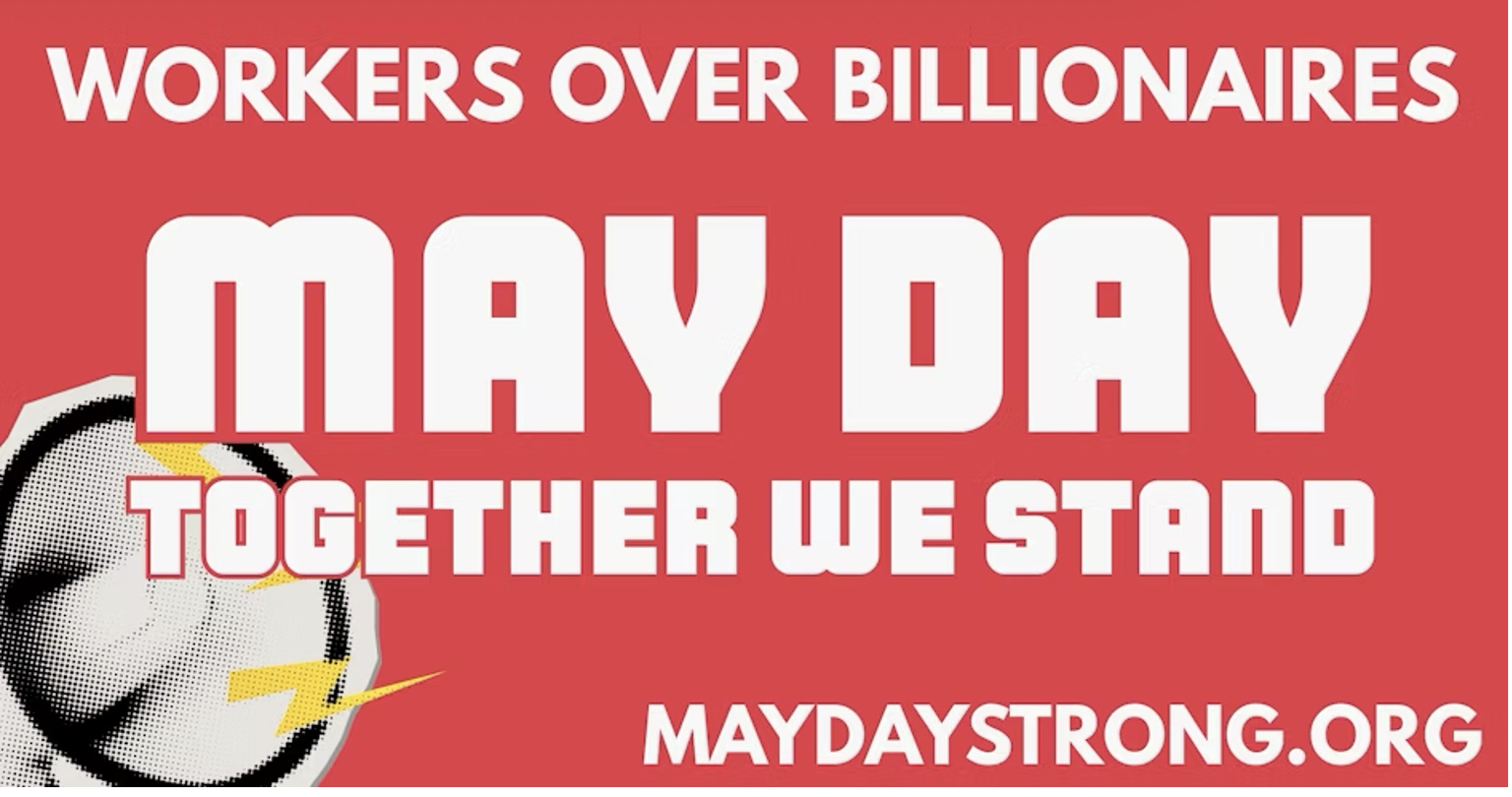
On May 1st, we celebrate the original Labor Day, International Workers Day, that commemorates the May 1, 1886, General Strike in the United States for an eight-hour day. May Day is a day to celebrate the proud history of the international labor movement and the brave people worldwide who have dedicated and sacrificed their lives to create a better world. May Day 2026 will demonstrate the power of collective action and solidarity. Join your fellow workers, classmates, and neighbors to rally and march.
Find out what is happening where you are located at MAYDAYSTRONG.
WEATHER UPDATE: Due to expected rain in Austin, organizers are developing contingency plans for the Central Labor Council May Day Labor Fair. The May Day Rally and March won’t be affected.
Texas State Employees Union (TSEU) activists Anne Lewis and Frank Netscher will highlight May Day’s history and discuss the 2026 mobilizations with guest host Alice Embree.
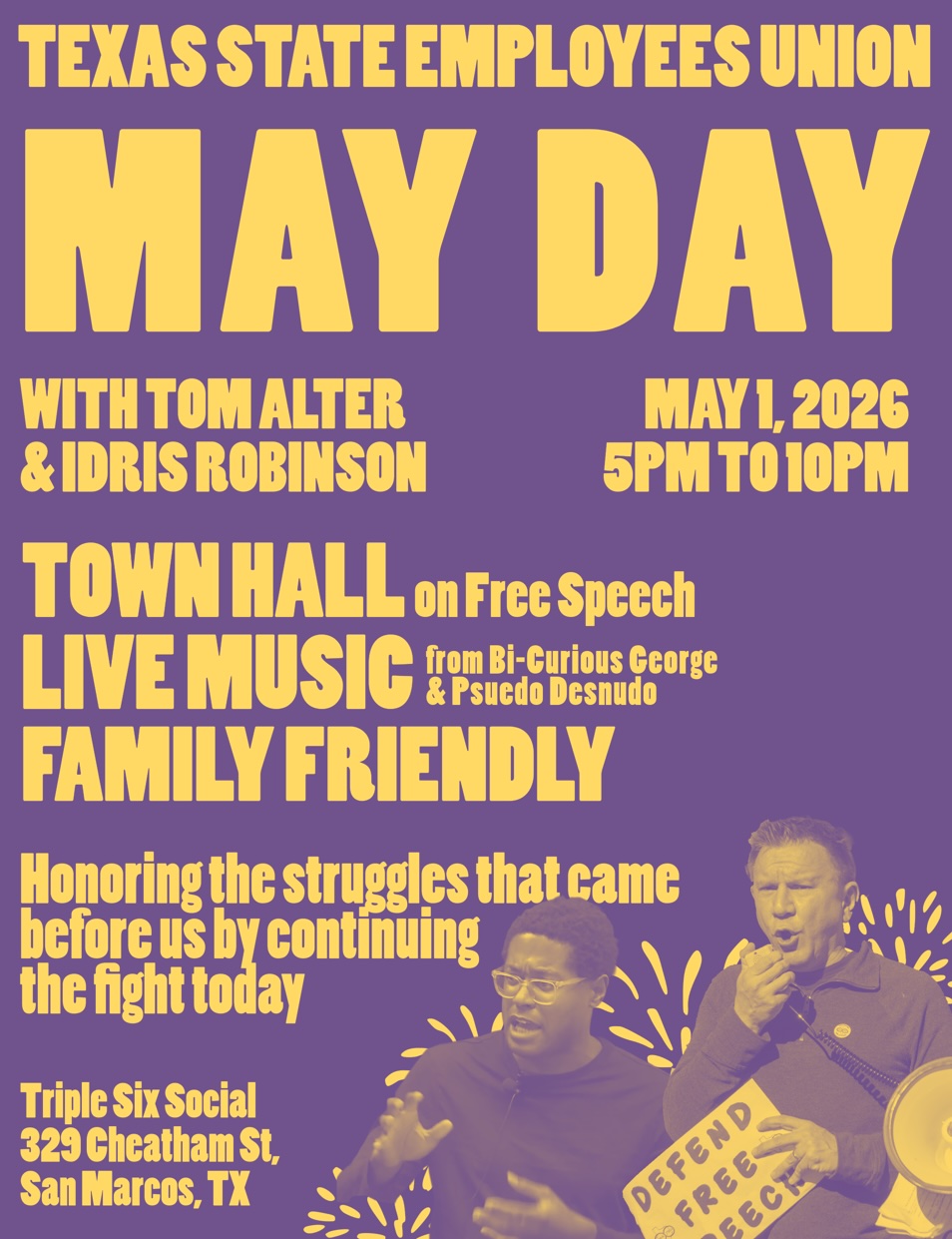
In San Marcos on May Day:
And on Saturday, May 2nd:
In celebration of May Day, Austin DSA is hosting a concert and fundraiser! Austin DSA will be bringing together bands, speakers, and opportunities to learn more about Austin DSA campaigns. Donate your socialist cash to help us take out capitalist trash! Join us this Saturday at Hole in the Wall, located at 2538 Guadalupe St, starting at 3pm! There will be great live music (we are in Austin after all), so come down to hang and celebrate May Day! Hope to see you there! — Austin DSA
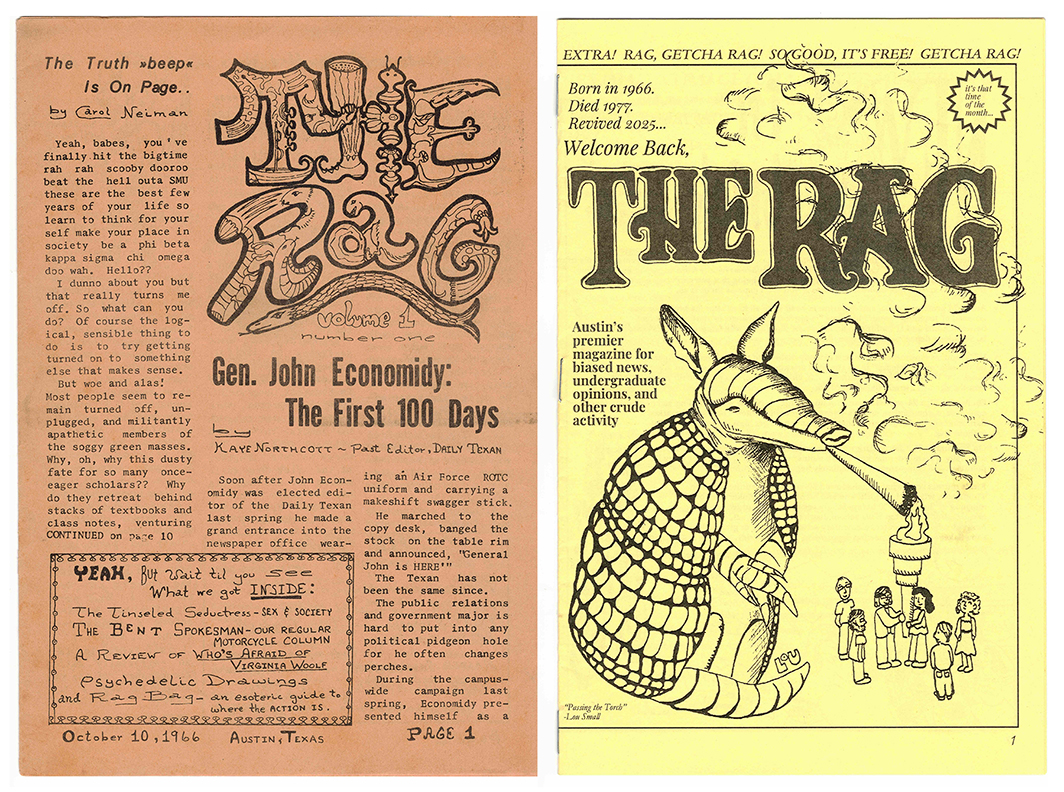
The Rag, Austin’s beloved underground newspaper, published 374 issues between 10/10/1966 and 5/9/1977. The first 12 issues were in a smaller format with a logo by artist Clelie Moore. Beginning 1/30/1967 The Rag was published as a tabloid with a new logo.
Students at the University of Texas at Austin are now publishing a new incarnation of The Rag as a monthly zine. See “A new Rag for a new generation.”
The Rag continues to stir interest, both in its past incarnation and its contemporary one. Since a 2005 reunion, former Ragstaffers have celebrated its lengthy existence with a movie, courtesy of People’s History in Texas, and a book.
For the record, and in honor of Earth Day, I wanted to identify The Rag’s various addresses on planet Earth. Rag offices were in West Campus houses, and even in Houston, before moving to more prominent places on Guadalupe Street.
The Rag moved into the basement of the 2200 Guadalupe Y on 9/30/1968 and then to the 2330 Guadalupe Y (second floor) in 3/3/1970 where the paper was located until it ceased publication. For a brief period in 1967, The Rag had a Houston address. Both Austin and Houston were on The Rag’s masthead between 7/17/1967 and 6/3/1969.
Here are the addresses. Some of the houses and buildings have been razed, but some are still standing.
The Rag started small. The first 12 issues were printed on a Multilith. It graduated to tabloid size at the beginning of 1967.
1/30/1967 – 5/9/1977 (tabloid/second logo)
10/10/1966 – 1/9/1967 (zine size/first logo)
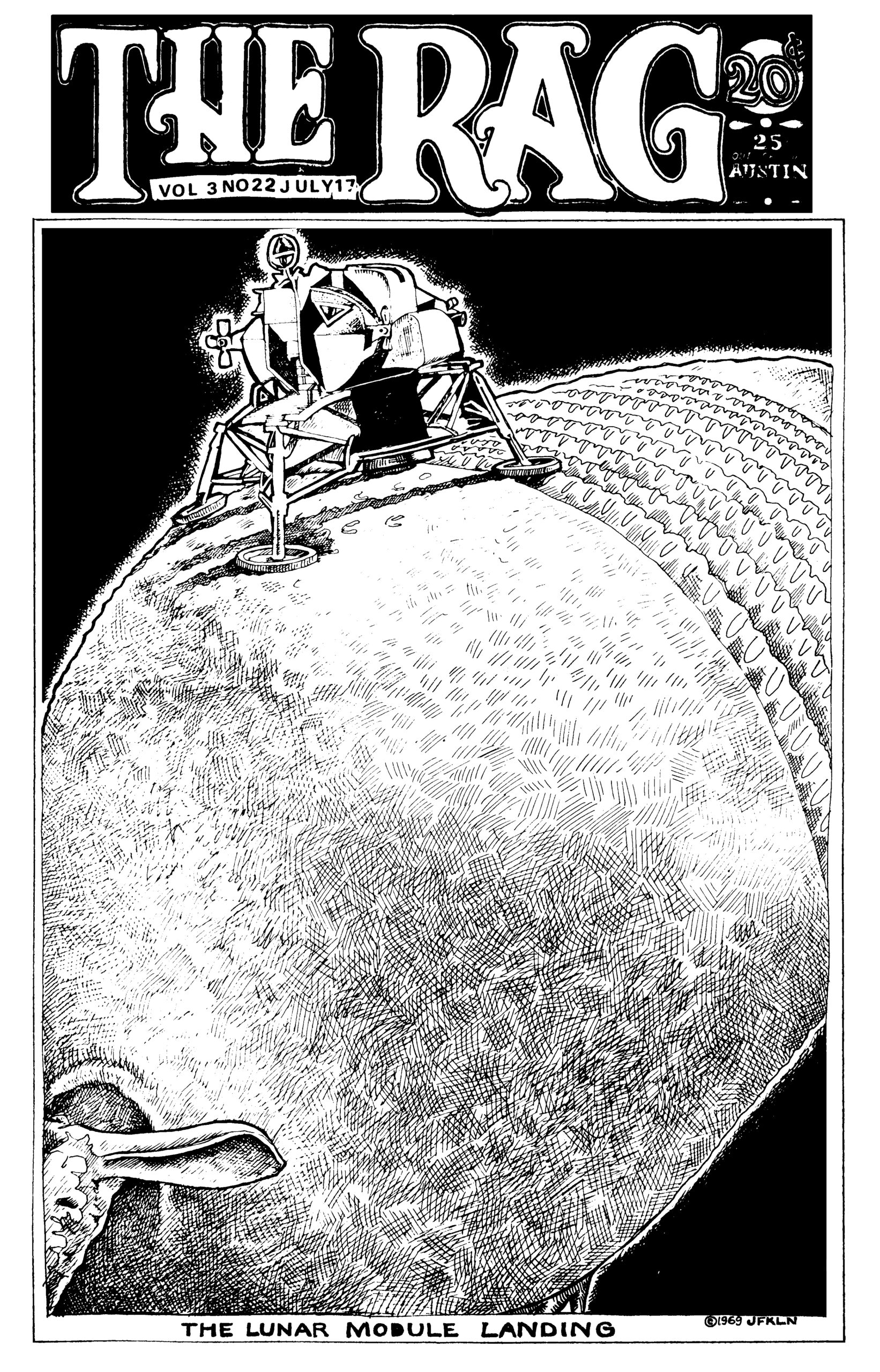
Lunar Landing
The latest space mission circled the moon and reminded us that we are earthlings. Those of us who are old enough remember the impact of the 1969 lunar landing. It made the cover of The Rag with artist Jim Franklin’s drawing, July 17, 1969.
TARA’s Senior Solidarity campaign focuses on four issues – Social Security, Medicare, Medicaid, and Voting Rights. We want to make sure candidates hear from seniors about these issues. If elected, we want to see them co-sponsor four pieces of legislation in the U.S. Congress. TARA will take this campaign to voters, community groups, and union locals as well as to candidate forums and congressional offices.
SOCIAL SECURITY: SS Trustees project that the trust fund will become insolvent in 2033 after which SS will only pay 77% of scheduled benefits.
Take immediate action to guarantee long-term SS solvency. Scrap the cap AND restore cuts to Social Security Field Offices. SUPPORT The Social Security Expansion Act S.770 and H.R. 1700 to extend Social Security’s solvency for 75 years. SUPPORT Keeping Our Field Offices Open Act H.R. 1876.
MEDICARE: The CMS WISeR (Wasteful & Inappropriate Service Reduction) pilot program expands AI-generated prior authorization into Traditional Medicare in AZ, NJ, OH, OK, TX and WA, paying AI companies to deny claims.
Tell CMS to end the WISeR pilot program NOW! SUPPORT The Smarter Act H.R. 5940 and S. 3480 to prohibit implementation of the WISeR model.
MEDICAID: Deep cuts to Medicaid in the Republican Budget Bill put many health care services for seniors at risk including home and community-based services and nursing home care. The cuts put rural hospitals and nursing homes at risk of closure.
Ensure that Medicaid is fully funded and accessible.SUPPORT legislation to fully restore Medicaid funding and staffing levels.
VOTING RIGHTS: States have erected barriers that make it harder to vote. Federal officials promote gerrymandering designed to maintain power, demand confidential state voter data, and erode the Constitutional right of states to conduct elections.
SUPPORT the John R. Lewis Voting Rights Advancement Act to strengthen legal protections against discriminatory voting policies and practices. OPPOSE new versions of the Save Act,
[Jan Lance is President of the Austin Chapter of Texas Alliance for Retired American (TARA Austin) and Secretary of the TARA state executive board. She is a retired public school teacher and textbook editor. Jan has the great fortune to be Yaya to two perfect grandchildren.]
By Michael Meeropol / The Rag Blog / March 23, 2026
People in the media have been scrambling in an attempt to actually figure out the reasoning behind Trump’s decision to launch a full-scale war against Iran. And they are right to note the many different versions of the justification: Israel was going to do it so decided to do it first (Secretary of State Rubio). No, we [the U.S.] pre-empted Israel because we knew Iran was going to attack us (President Trump). One of Trump’s former national security advisors, Nadia Schadlow, was recently interviewed by Ezra Klein.
The long (ridiculously long) transcript is available but I advise people not to bother reading it. Her main argument is that Iran was always a “threat” — which she defines as attempting to acquire a nuclear weapon and supporting various militias in the area — Hezbollah in Lebanon, Hamas in Palestine. What she never explains (and Klein lets her get away with it) is why it suddenly became so urgent now.
If we recognize the Trump Administration justifications for what they are — garbage — then how do we explain this war of choice? I think it might be possible to make a case on U.S. empire grounds. As readers of my work know, I am a follower of the historian William Appleman Williams whose book The Tragedy of American Diplomacy was widely read in the years when the movement struggled to stop the U.S. from making war against the peoples of Indochina. His explanation of the U.S. “ruling class’s” desire for an open door for markets and investments in the entire world led to U.S. expansionism beyond the continentalUnited States — first in Latin America and Asia – Cuba and the Phillipines — and later in the entire world
Williams points out that this became a recipe for conflict — whether with Mexican revolutionaries after the 1910 revolution, or with the Bolsheviks after 1917. Later the rising Japanese empire led to our entry into World War II. Finally, after partnering with the Soviet Union to win the war, the desire for an open door in Eastern Europe and post-war Asia led toboth the Cold War and two mini-hot wars.
As a general rule, according to Williams’ analysis, nationalists who stand in the way of such expansionism are considered dangers to long run American prosperity. This applied to Vietnamese nationalist-communists fighting the French in the early 1950s, Iranian or Guatemalan nationalists in 1953 and 1954, or Cuban Nationalist-Communists in the 1960s.
[For a cliff notes discussion of the original Open Door Notes from the State Department see https://history.state.gov/milestones/1899-1913/hay-and-china. Williams’ main point is that the principles articulated in those notes became the basis of U.S. foreign policy from that point forward.]
With the victory of the U.S. in the Cold War, it seems there was an initial hope that the entire world would soon be open for the United States international corporations. Eastern Europe and Russia were wide open after 1990, and 11 years of negotiation later, China joined the World Trade Organization which set limits on the amount of state intervention by the government into the economy. When George W. Bush was president he announced that there was an “axis of evil” in the world — which included Iraq, Iran, and North Korea. The plan of his brain trust was to quickly defeat Saddam Hussein in Iraq and then turn attention to Iran. In addition, he tightened the long U.S. embargo on Cuba hoping to put enough pressure on them to change their political and economic system. With these pesky dots of nationalism out of the way, the entire world would be open to U.S. expansion.
Unfortunately for the celebratory leaders of the Bush II foreign policy, Iraq proved a quagmire, China remained a highly controlled economy, and Vladimir Putin came to power in Russia and solidified control. Thus, many of the so-called “open doors” were closing or remained closed. If the U.S. political and economic leadership continues to believe we need “open doors” all over the world, then the idea of defeating the nationalist government of Iran remained high on the “to do” list. If this interpretation is correct, an administration like Trump’s would only be waiting for the “right moment” to attempt to deliver a death blow to the Iranian regime. But it’s hard to imagine Trump and Hegseth having the sophistication to even understand this rationale.
Thus, I do not for a minute believe Trump or Hegseth (or even Rubio) have thought this out. Rubio actually is hoping that success in Iran will lead Trump to take over Cuba – and he has personal reasons for that. For Trump and Hegseth they are just flexing their muscles like a teenage bully in the playground — with disgusting dire consequences for thousands of Iranians and many others, including some American military personnel.
In December of 2014, I presented a commentary to WAMC-FM which focused on the imperial nature of American Foreign Policy. In it, I made the argument that the costs of creating and maintaining an American Empire amounts to a massive redistribution of income from ordinary taxpayers to those particular businesses which benefit from supplying the war machine and those that benefit from the control of international sources of raw materials and access to foreign markets. We the people get nothing out of having an empire — except that from time to time our young people have to fight and bleed and die for it.
It is ridiculously ironic and as I prepare this article, we are four weeks into President Trump’s seventh military assault of his second term. And this is the man who makes believe he has “ended” a whole bunch of wars (most of which we Americans had never heard of — and most of which are still going on) and deserves the Nobel Peace Prize. On the contrary, he has already unilaterally attacked six separate countries plus boats on the high seas. Since most of these attacks did not provoke retaliation one can hardly call them wars but they certainly are not the acts of a peace-maker. Let’s remind ourselves what he has done: shooting boats out of the water claiming (falsely) that they were bringing drugs to the United States — invading Venezuela to kidnap its president — illegally blockading Cuba, attempting to destroy their economy by keeping out oil — bombing assaults on Syria, Iraq, Yemen (the Houthi rebels) and now we have that full scale war with Iran.
Why is he doing this? I noted above that it is highly unlikely that Trump, Hegseth, and others have developed the “case for the American empire” that I summarized. Instead, I think there are two potential reasons to explain why Trump has started this war: First, he is doing this because he can. As commander in chief of the armed forces he has a great deal of leeway. Congressional Republicans have so far enabled him. What are the arguments we hear in favor of these activities? Well, most of them are lies but let’s see.
Here are three points he makes: “Iran poses a threat to global order by way of its damaged but abiding nuclear ambitions, its deep strategic ties to Moscow and Beijing, its persistent threats to maritime commerce and its support for international terrorism.”
One could argue that should Iran acquire nuclear weapons, that would stabilize things because countries like Israel and the U.S. would think twice before attacking them. Notice that after a few exchanges of letters between Trump and the dictator of North Korea, Kim Jong-Un, there appears to be no danger of war on that Korean peninsula. The idea about persistent threats to maritime commerce is laughable. Iran has proven that it can close off the Strait of Hormuz anytime it wishes to and it has not done so at any time since the end of the Iran-Iraq war in 1988. It is Trump’s war that has closed off the Strait of Hormuz.
Stephens again: “[Iran] poses a threat to regional stability, not just through its support for anti-Israel proxies like Hamas and Hezbollah, but also by its meddling in Lebanon, Iraq, Yemen and (until the overthrow of the Bashar al-Assad regime) Syria.” One could make the case that Israel is the real threat to regional stability with its many interventions in Lebanon in particular. As for meddling in Iraq — wasn’t it the United States that invaded Iraq deposing Saddam Hussein and turning the country into a cauldron of internal conflict? Iran’s interventions in the various civil wars in that region is not the only cause of on-going conflict.
And finally, Stephens plays the “humanitarian intervention” card: “And [Iran is] a mortal threat to the life and safety of its own people, many thousands of whom it slaughtered last month.
There was a time not long ago when Americans, both left and right, cared enough about human rights to believe it could, in some circumstances, justify military intervention.” Humanitarian intervention is all the rage ever since the Bosnian Civil War of the 1990s. It rarely works out the way its supporters claim. Trying to effect regime change in Iran would be a major undertaking — making the American lives and treasure expended in Iraq and Afghanistan look like chump change. One could make the case that the best way to support democracy in Iran is to renegotiate the deal that President Obama made with the Iranians about keeping their nuclear ambitions limited.
After that and the dropping of sanctions, Iran could rejoin the family of nations so it can prosper — a prosperous country might loosen the grip of the religious autocracy on the population. Certainly, what the U.S is doing in Iran now is not helping the Iranian people get out from under the jack-boots of the religious autocracy.
Another not-so-far fetched reason for Trump’s war-making, however, is that the war is getting (at least temporarily) the Jeffery Epstein scandal off the front pages. And this is just when information is finally coming out about a source the FBI interviewed who claimed she was sexually exploited by Trump himself when she was a teenager.
Based on recent testimony from Epstein’s accountant, that same alleged victim received a settlement payment from the Epstein estate. See Daily Beast, “Epstein Accountant Spills Bombshell Payout to Alleged Trump Victim.” And according to recent polling data, it appears my “guess” is not all that “crazy.”
This piece is being published after 27 days of war. At times during this period, Trump has asserted that the war is “almost over” that he has achieved “almost all” of his objectives — mind you, this is without ever explaining those objectives — though at least once he said he wanted “unconditional surrender” — a complete impossibility without total occupation of the entire territory of Iran, just as happened at the end of World War II in Germany and Japan. But during the period from March 14 to 21 Iran kept most shipping from going through the Strait of Hormuz and the U.S. kept bombing more and more sites in Iran.
During the weekend of March 14-15, Trump suddenly began to demand that his allies (and even non-allies like China) send ships to escort tankers through the Gulf of Hormuz. He had plans to send ships to escort vessels through that narrow passage. Thus, the price of oil continued to rise and the inability of ships (carrying all sorts of things besides oil) to traverse that passage remained the centerpiece of Iran’s resistance to the U.S. attack.
A number of writers have made it clear that as the chance of a quick end to the war has receded, the main dynamic is that the Iranian regime “wins” merely by surviving. Meanwhile, the United States is in no position to “declare victory” and end the war because the Iranians can continue to make shipping through the Strait of Hormuz impossible for the foreseeable future. In other words –- Iran needs some kind of “deal” with the United States before it will let shipping resume through the Strait.
On Tuesday, March 17, Joe Kent, the head of the National Counter-Terrorism Center resigned because he could not, “in good conscience” support Trump’s war. In his resignation letter, which he made public, he asserted what virtually everyone watching Trump’s absurd assertion that Iran was about to attack the U.S. knew to be true. There was no such threat from Iran — the argument of an imminent attack was “a lie.”
Kent was a strong supporter of Trump’s “America First” foreign policy. Many Democrats opposed his confirmation because he was a 2020 election denier who claimed the people who stormed the capitol on January 6, 2021, were “political prisoners.” He, in other words, was not opposed to Trump and had happily served his Administration in Trump’s first term. But he saw what he saw and he knew what he knew and — unlike many of the cowards who still enable Trump from within his administration — he had the courage to say, enough.
(Unfortunately, he also is an anti-semite as is made clear in the following article: https://www.vox.com/politics/482918/joe-kent-iran-war-resign-trump-antisemitism. He is part of a group that goes back to Patrick Buchanan’s opposition to Bush II’s Iraq War which he (Buchanan) laid at the doorstep of the “amen corner” — a clear reference to American Jews who support Israel. I think Kent and Buchanan are both wrong that Israel called the shots on U.S. foreign policy in the Middle East. Netanyahu has attempted to persuade many American presidents to go to war against Iran — only Trump with his cowboy mentality decided to do it!)
On Wednesday the 18th of March, economist Paul Krugman took a deep dive into the idea that investments by petro-states (particularly Saudi Arabia) which have enriched the Trump family as well as promising to increase economic activity within the US have perhaps been a major influence on Trump’s decision to go to war in Iran.
On March 19, the British Guardian published an article reporting that a British expert who had attended the US-Iran talks in Geneva right up to the point where the Israelis and Americans launched this war claimed that real progress towards a deal was being made. This suggests that the U.S. and Israel launched the war to head off a possible deal.
Sometime during the week of March 16-20, the issue of occupying some Iranian territory with ground troops arose — a major escalation and one that might actually lead to significant U.S. casualties and a split in the Republican Party.
I wonder how long it will take the American public to get so mad about this war that they force. Trump to (falsely) claim victory and declare a full cease fire. And I wonder how long after that the Iranians will keep the Strait of Hormuz closed — they will have a say as to when this war actually ends. This means, as the N Y Times asserts in an opinion piece from March 17, 2026, Trump Cannot Spin His Way Out Of This War.
Finally, I wonder if between the time I submit this article and the time it is published, Trump will have committed a marine expeditionary force to attempt to take over Iranian territory. It would be a disaster for him politically but he just might have the arrogance to do it anyway.